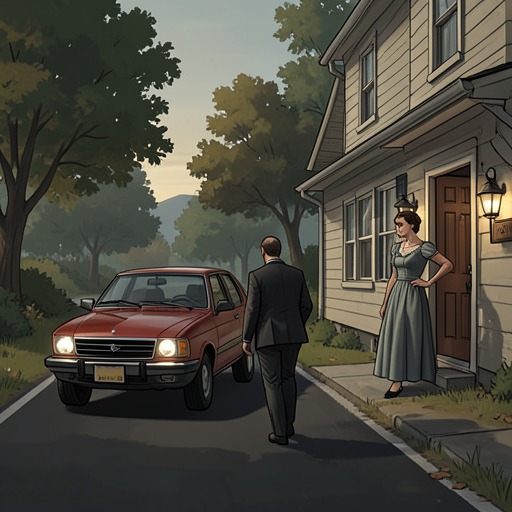
Geoffrey
The Death of Bunny MunroGeoffrey is Bunny’s boss at Eternity Enterprises and one of the few people who can meet his irreverence with both humor and concern. Bunny sees him as diminished and ridiculous, yet likes him; beneath their crude banter, Geoffrey offers a form of paternal advice and, at a crisis point, delivers a message that forces Bunny to confront his father’s condition.
Identity and Workplace
Geoffrey works from a small office on Western Road, where he is described through Bunny’s sharply unflattering perspective. He has grown heavy and is usually found in a swivel chair; framed photographs in the office preserve an earlier version of him, fit and almost handsome. The contrast makes the office feel like a record of time passing, though Bunny’s assessment is not simply contemptuous: he calls Geoffrey a sad case in his own mind, but admits that he likes him.
Geoffrey’s workplace manner is theatrical. He habitually carries a handkerchief, and his voice, laughter, and gestures give even a routine exchange an oversized comic quality. When Bunny visits the office, Geoffrey is seated in the same swivel chair, wearing a Hawaiian shirt, and greets him with a deliberately silly riddle. The joke and Bunny’s performatively bored response establish their familiar rhythm: Geoffrey invites the exchange, and Bunny signals that he will not be impressed, even as he stays to talk.
Humor and Rapport with Bunny
Their friendship and working relationship are expressed through teasing rather than formality. Bunny addresses Geoffrey with an insult when answering his call, and Geoffrey responds by telling him a crude joke. Bunny indicates that he has heard it before. The exchange presents a shared register of provocation, but also suggests ease: Bunny can be disrespectful without ending the conversation, and Geoffrey accepts the manner as part of their rapport.
Geoffrey’s jokes recur when Bunny enters his office. On one occasion, he asks a riddle whose punchline is deliberately absurd; Bunny rolls his eyes, but remains in the room. This humor gives Geoffrey a recognizable social role in Bunny’s working life, not as a remote authority but as an intimate, comic interlocutor. The jokes do not erase the imbalance between employer and employee, but they soften it, making the office a place where Bunny can approach Geoffrey in his own irreverent way.
Counsel and Concern
Geoffrey’s comic persona coexists with a more reflective manner. Bunny sometimes experiences him as possessing a paternal, almost Buddha-like wisdom, and Geoffrey’s own history gives that advice a personal basis. When Bunny comes to collect a client list and samples, Geoffrey checks whether he is sure he is ready and suggests taking time to sort things out. Bunny insists that he is all right and says he needs the materials because he has run out of samples. Geoffrey does not press the point; instead, he recalls that after losing Hilda, it took him time to recover.
The exchange is small but revealing. Geoffrey recognizes that Bunny may need time, yet leaves the decision with him. His memory of Hilda makes the advice more than a managerial caution: it is an attempt to speak from bereavement without claiming that the two men’s situations are identical. Bunny’s determination to carry on is not treated as proof that he has recovered. Geoffrey offers an alternative measure of readiness, grounded in his own experience, while still handing over what Bunny has asked for.
Geoffrey’s presence at a service for someone close to Bunny also shows his support outside the office. He arrives with Scotch in the pockets of his large jacket, calls out to Bunny, and embraces him. When he says the service was lovely, those present agree. The scene places Geoffrey within Bunny’s circle of mourners, not just among his business contacts. His exuberant entrance is comically conspicuous, but his arrival and embrace make his affection legible without requiring a change in his flamboyant manner.
The Urgent Message
Geoffrey becomes a link between Bunny’s immediate crisis and the worsening situation at his father’s home. During a phone call, Bunny tells him he is not all right. Geoffrey then explains that Miss Lumley, who identifies herself as Bunny’s father’s carer, has called the office. She sounds angry and insists that Bunny go to his father’s place urgently, describing the matter as grave. Geoffrey reports that Bunny’s father is very sick, then pauses while Bunny absorbs the news.
Geoffrey does not present himself as the person who can resolve the emergency. He is passing on what the carer has said, and makes that limited role explicit. Yet the call’s timing gives it force: Geoffrey reaches Bunny while he is already distressed, and the news adds an immediate demand that he turn toward his father. Bunny throws the phone onto the dashboard and pounds the steering wheel in frustration. Geoffrey’s message therefore does not soothe him, but it makes the urgency impossible to ignore.
Narrative Role
Geoffrey’s characterization depends on a productive contrast: Bunny’s dismissive description of his employer sits beside genuine affection, and Geoffrey’s tasteless humor sits beside patience and practical care. He is neither a solemn mentor nor merely a comic caricature. The office jokes, the personal recollection of Hilda, the embrace at the service, and the urgent call each show a different register of the same relationship.
He also serves as a point of contact between Bunny’s commercial routine and the private obligations that routine cannot contain. Geoffrey supplies the samples Bunny wants so he can continue working, but he also questions whether Bunny should take time; later, through the message from Miss Lumley, he brings the father’s crisis into Bunny’s journey. His role is consequently modest but consequential. He cannot make Bunny’s grief orderly or choose for him, yet he offers both counsel and information at moments when Bunny’s usual momentum is under pressure.